
2024 JAMB Agricultural Science Past Questions and Answers
The 2024 JAMB Agricultural Science past questions with answers: 54 objective questions from the 2024 paper in the DeeepSolve question bank, each with its answer behind "Show answer". Try each question before you check, then practise the paper as a timed JAMB-style CBT.
Past questions © the examination body (JAMB/WAEC/NECO). DeeepSolve is not affiliated with them. Rights holders: see /copyright.
Questions
- 1.
Air sacs are present in
- A.rabbit
- B.goat
- C.poultry
- D.cattle
Show answer
Answer: C. poultry
Get a step-by-step AI explanation in the appGet a step-by-step AI explanation in the app
- 2.
The correct sequence of the components of a goat's stomach is
- A.rum en - reti culum - abomasum -omasum
- B.rum en - reti culum - omasum - abomasum
- C.reti culum - rum en - omasum - abomasum
- D.reti culum - omasum - abomasum - rum en
Show answer
Answer: B. rum en - reti culum - omasum - abomasum
Get a step-by-step AI explanation in the appGet a step-by-step AI explanation in the app
- 3.
Which of the following does not fit into the agricultural use of land
- A.crop production
- B.animal production
- C.forest establishment
- D.mining
Show answer
Answer: D. mining
Get a step-by-step AI explanation in the appGet a step-by-step AI explanation in the app
- 4.
Which of the following processes will not lead to the loss of nutrients from the soil?
- A.leaching
- B.harvesting
- C.erosion
- D.mulching
Show answer
Answer: D. mulching
Get a step-by-step AI explanation in the appGet a step-by-step AI explanation in the app
- 5.
New-born animals should be fed with colostrum because it
- A.provides them permanent immunity against diseases
- B.contains antibodies protecting them against diseases
- C.is easily digested
- D.is the first milk produced before birth
Show answer
Answer: B. contains antibodies protecting them against diseases
Get a step-by-step AI explanation in the appGet a step-by-step AI explanation in the app
- 6.
The most important factor that determines the rate of agricultural development in a country is the
- A.number of machinery available in the country
- B.readiness of farmers to adopt viable agricultural research results
- C.quantity of herbicides used in the country
- D.provision of raw materials for industries
Show answer
Answer: B. readiness of farmers to adopt viable agricultural research results
Get a step-by-step AI explanation in the appGet a step-by-step AI explanation in the app
- 7.
Andropogon gayanus is commonly called
- A.guinea grass
- B.spear grass
- C.gamba grass
- D.elephant grass
Show answer
Answer: C. gamba grass
Get a step-by-step AI explanation in the appGet a step-by-step AI explanation in the app
- 8.
Weed plants which grow on other plants without deriving nutrients from them are called
- A.epiphytes
- B.saprophytes
- C.decomposers
- D.sedge
Show answer
Answer: A. epiphytes
Get a step-by-step AI explanation in the appGet a step-by-step AI explanation in the app
- 9.
One of the peculiarities of the intestine tract of a fowl is the possession of
- A.oesophageal groove
- B.cloaca
- C.large intestine
- D.stomach
Show answer
Answer: B. cloaca
Get a step-by-step AI explanation in the appGet a step-by-step AI explanation in the app
- 10.
Which of the following will not lead to loss of nitrogen compound from the soil? .
- A.burning
- B.crop removal
- C.lodging
- D.leaching
Show answer
Answer: C. lodging
Get a step-by-step AI explanation in the appGet a step-by-step AI explanation in the app
- 11.
Which of the following statements is not correct about the land use act?
- A.Government has control over unused land
- B.land cannot be used for any purpose
- C.it aims at re-allocation of land for farming purposes
- D.it does not lead to land fragmentation
Show answer
Answer: B. land cannot be used for any purpose
Get a step-by-step AI explanation in the appGet a step-by-step AI explanation in the app
- 12.
The replacement of traditional farming methods with modern methods is a step in agricultural
- A.expansion
- B.education
- C.development
- D.diversification
Show answer
Answer: C. development
Get a step-by-step AI explanation in the appGet a step-by-step AI explanation in the app
- 13.
Plant breeders aim at obtaining the following except
- A.adaptation to pollination
- B.tolerance to climate extremes
- C.uniformity in the time of maturity
- D.resistance of pest
Show answer
Answer: A. adaptation to pollination
Get a step-by-step AI explanation in the appGet a step-by-step AI explanation in the app
- 14.
The replacement of traditional farming methods with modern methods is a step in agricultural development
- A.diversification
- B.education
- C.expansion
- D.development
Show answer
Answer: D. development
Get a step-by-step AI explanation in the appGet a step-by-step AI explanation in the app
- 15.
Which of the following is an example of igneous rock?
- A.granite
- B.sandstone
- C.limestone
- D.gneiss
Show answer
Answer: A. granite
Get a step-by-step AI explanation in the appGet a step-by-step AI explanation in the app
- 16.
The alternate heating and cooling of rocks will result in
- A.sublimation
- B.solidification
- C.fragmentation
- D.molten magma
Show answer
Answer: C. fragmentation
Get a step-by-step AI explanation in the appGet a step-by-step AI explanation in the app
- 17.
The factors that affect the number and the activities of soil micro-organisms include the following except
- A.soil moisture
- B.top biography
- C.degree of soil acidity
- D.soil aeration
Show answer
Answer: B. top biography
Get a step-by-step AI explanation in the appGet a step-by-step AI explanation in the app
- 18.
Government laws and reforms are aimed at .
- A.discouraging investment in agriculture
- B.increasing agriculture production
- C.controlling farm profits
- D.encouraging importation of agriculture pmduce
Show answer
Answer: B. increasing agriculture production
Get a step-by-step AI explanation in the appGet a step-by-step AI explanation in the app
- 19.
Gestation period is defined as the time
- A.of release of ovum from the ovary
- B.of fusion of the sperm and the egg
- C.of the birth of the young animal
- D.between conception and parturition
Show answer
Answer: D. between conception and parturition
Get a step-by-step AI explanation in the appGet a step-by-step AI explanation in the app
- 20.
The tree species commonly planted for pulpwood is
- A.albizia
- B.gmelina
- C.tactona
- D.cassia
Show answer
Answer: B. gmelina
Get a step-by-step AI explanation in the appGet a step-by-step AI explanation in the app
- 21.
The roles of government in the development of agriculture include the following except
- A.provision of subsidies
- B.establishment of farm settlements
- C.training of farmers children
- D.recommending loans
Show answer
Answer: C. training of farmers children
Get a step-by-step AI explanation in the appGet a step-by-step AI explanation in the app
- 22.
The following are characteristics of quartz except
- A.having cleavage
- B.being granular
- C.being glass-like
- D.having shiny surface
Show answer
Answer: A. having cleavage
Get a step-by-step AI explanation in the appGet a step-by-step AI explanation in the app
- 23.
Igneous rocks formed within the crust are called
- A.plutonic
- B.volcanic
- C.stratified
- D.guartzite
Show answer
Answer: A. plutonic
Get a step-by-step AI explanation in the appGet a step-by-step AI explanation in the app
- 24.
Financial assistance from the government to the farmers is usually in the following forms except
- A.tax
- B.loans
- C.credit
- D.subsidy
Show answer
Answer: A. tax
Get a step-by-step AI explanation in the appGet a step-by-step AI explanation in the app
- 25.
The provision of farm inputs to farmers by the government can best be described as
- A.credit
- B.subsidy
- C.capital
- D.loan
Show answer
Answer: B. subsidy
Get a step-by-step AI explanation in the appGet a step-by-step AI explanation in the app
- 26.
Which of the following livestock endoparasite is a hermaphmdite?
- A.trypanosome
- B.roundworm
- C.liverfluke
- D.tapeworm
Show answer
Answer: A. trypanosome
Get a step-by-step AI explanation in the appGet a step-by-step AI explanation in the app
- 27.
Which of the following will not be affected by an excessive amount of water content in feeds?
- A.improving quality of such feeds
- B.decrease in nutritive value
- C.encouraging growth of molds
- D.formation of toxic products
Show answer
Answer: A. improving quality of such feeds
AI explanation
Analysis of the Question
The question asks us to identify which of the listed outcomes is not a consequence of having an excessive amount of water (moisture) in animal feeds. In agricultural science, moisture content is a critical factor in feed storage and preservation.
Concept Explanation
When animal feed contains too much water (high moisture content), it creates an environment that is biologically and chemically unstable.
- Nutritive Value: High moisture dilutes the concentration of nutrients per unit weight and can lead to leaching or chemical degradation, causing a decrease in nutritive value.
- Microbial Growth: Moisture is essential for the growth of fungi and bacteria. Excessive water encourages the growth of molds, which can spoil the feed.
- Toxicity: As molds grow, they often produce mycotoxins (toxic substances), and the chemical breakdown of feed components in the presence of excess water can lead to the formation of other harmful, toxic products.
Step-by-Step Evaluation
- Option B (Decrease in nutritive value): This is a direct result of high moisture. Excess water adds weight without adding nutrients, effectively lowering the nutrient density.
- Option C (Encouraging growth of molds): Molds thrive in damp environments. High moisture content is the primary cause of mold infestation in stored grains and feeds.
- Option D (Formation of toxic products): As mentioned, mold activity and chemical spoilage caused by excess moisture lead to the production of toxins, which are dangerous to livestock.
- Option A (Improving quality of such feeds): High moisture content is detrimental to feed quality. It promotes spoilage, reduces shelf life, and makes the feed unsafe for consumption. Therefore, it does not improve the quality; it significantly degrades it.
Conclusion
Since options B, C, and D are all negative consequences of excessive water in feeds, they are "affected" by it. Option A is the only statement that describes an outcome that does not happen (in fact, the opposite happens).
Exam Tip: When you see questions asking what will "not" happen, look for the option that describes a positive outcome in a scenario that is clearly negative (like feed spoilage). Always remember the "3 Ms" of feed storage: Moisture, Molds, and Mycotoxins—they are all linked!
AI can make mistakes. Report anything that looks wrong.
- 28.
Which of the following soil water is tightly held to the surface of the soil particles?
- A.capillary water
- B.superfluous water
- C.hygroscopic water
- D.gravitational water
Show answer
Answer: C. hygroscopic water
Get a step-by-step AI explanation in the appGet a step-by-step AI explanation in the app
- 29.
The water-snail is important in the life cycle of
- A.coccidium
- B.tapeworm
- C.roundworm
- D.liver fluke
Show answer
Answer: D. liver fluke
Get a step-by-step AI explanation in the appGet a step-by-step AI explanation in the app
- 30.
Which of the following uses of land should be given more attention in Nigeria for self-sufficiency in food production?
- A.building of research centi-es
- B.establishment of wildlife
- C.establishment of agriculture and forestry
- D.construction of roads
Show answer
Answer: C. establishment of agriculture and forestry
Get a step-by-step AI explanation in the appGet a step-by-step AI explanation in the app
- 31.
Gneiss is a metamorphic rock formed from?
- A.Granite
- B.Slate
- C.Shale
- D.Sandstone
Show answer
Answer: A. Granite
Get a step-by-step AI explanation in the appGet a step-by-step AI explanation in the app
- 32.
Which of the following defines agriculture?
- A.a way of life by which farmers produced food
- B.the raising of crops to satisfy human needs
- C.the science and art of farming to satisfy human needs
- D.the raising of farm animals by rural communities
Show answer
Answer: C. the science and art of farming to satisfy human needs
Get a step-by-step AI explanation in the appGet a step-by-step AI explanation in the app
- 33.
The horizon of the soil profile that encourages the greatest level of microbial activity is
- A.D -horizon
- B.A-horizon
- C.C-horizon
- D.B-horizon
Show answer
Answer: B. A-horizon
AI explanation
Analysis of the Question
The question asks you to identify the specific layer (horizon) of the soil profile where microorganisms are most active. To answer this, we need to understand the composition of soil horizons and what microorganisms require to thrive.
Concept Explanation
A soil profile is a vertical section of the soil that shows its different layers, known as horizons. These horizons are:
- A-horizon (Topsoil): This is the uppermost layer. It is rich in organic matter (humus), nutrients, and minerals. Because it is near the surface, it has the best aeration (oxygen supply) and moisture retention, which are essential for the survival and reproduction of bacteria, fungi, and other soil organisms.
- B-horizon (Subsoil): This layer lies beneath the topsoil. It contains minerals leached from the topsoil but has significantly less organic matter and fewer nutrients.
- C-horizon (Parent Material): This consists of partially weathered rock. It has very little organic matter and is generally inhospitable to most microorganisms.
- D-horizon (Bedrock): This is the solid, unweathered rock layer at the very bottom. It contains no organic matter and no microbial activity.
Microbial Activity: Microorganisms (like bacteria and fungi) act as decomposers. They need organic matter (food), oxygen, and a suitable temperature to survive. Since the A-horizon contains the highest concentration of organic matter and is well-aerated, it is the "hotspot" for microbial life.
Step-by-Step Solution
- Evaluate the requirements: Microbial activity depends on the availability of organic matter and oxygen.
- Compare the horizons: • The A-horizon is the zone of accumulation of organic matter (humus). • The B, C, and D horizons have progressively less organic matter as you go deeper into the earth.
- Conclusion: Because the A-horizon provides the most food (organic matter) and the best environment for respiration, it naturally supports the highest population of microorganisms.
Final Answer
The correct option is B.
Exam Tip: Think of the soil profile like a house. The A-horizon is the "kitchen" where all the food (organic matter) is kept, so that is where all the "workers" (microorganisms) will gather to eat and work!
AI can make mistakes. Report anything that looks wrong.
- 34.
Which of the following group of crops can be attacked by smut diseases?
- A.sugarcane, maize and banana
- B.guinea corn, sugarcane and rubber
- C.maize, guinea corn and yam
- D.rice, maize and guinea corn
Show answer
Answer: D. rice, maize and guinea corn
Get a step-by-step AI explanation in the appGet a step-by-step AI explanation in the app
- 35.
Gummosis is caused by a
- A.fungus
- B.nematoda
- C.virus
- D.bacterium
Show answer
Answer: A. fungus
Get a step-by-step AI explanation in the appGet a step-by-step AI explanation in the app
- 36.
An accessory sex gland in bull is
- A.thyroid gland
- B.prostrate gland
- C.pancreatic gland
- D.pituitary gland
Show answer
Answer: B. prostrate gland
Get a step-by-step AI explanation in the appGet a step-by-step AI explanation in the app
- 37.
Although clay soil is rich in nutrients, they are not good for most agricultural crop production because they do not release their nutrients are too compact and poorly aerated contain too much iron, aluminum, and boron lose their nutrient too readily after rain
- A.do not release nutrients
- B.are too compact or poorly aerated
- C.contains too much iron,aluminum and boron
- D.lose their nutrient readily after rain
Show answer
Answer: B. are too compact or poorly aerated
Get a step-by-step AI explanation in the appGet a step-by-step AI explanation in the app
- 38.
Which of the following is not correct about the importance of agriculture?
- A.provision of the raw materials for agro-based industries
- B.serving as main source of foreign exchange
- C.supply of food
- D.provision of employment
Show answer
Answer: B. serving as main source of foreign exchange
Get a step-by-step AI explanation in the appGet a step-by-step AI explanation in the app
- 39.
Which of the following group of basic amenities should be provided in rural areas for improved agricultural productivity?
- A.Roads, airport and recreation centers.
- B.water, electricity and health care centres
- C.electricity, guest houses and water
- D.health care centres, water and airport
Show answer
Answer: B. water, electricity and health care centres
Get a step-by-step AI explanation in the appGet a step-by-step AI explanation in the app
- 40.
The type of soil with a particle size of 0.02 to
- A.Clay
- B.silt
- C.fine sand
- D.coarse sand
Show answer
Answer: C. fine sand
AI explanation
Analysis of the Question
The question asks for the classification of a soil particle based on a specific size range. In Agricultural Science, soil particles are categorized based on their diameter (measured in millimeters). The range provided (0.02 mm) is a key threshold in the International Soil Science Society (ISSS) classification system.
Concept Explanation
Soil texture is determined by the proportion of sand, silt, and clay particles. To identify the correct answer, we look at the standard particle size distribution:
- Coarse Sand: 2.0 mm – 0.2 mm
- Fine Sand: 0.2 mm – 0.02 mm
- Silt: 0.02 mm – 0.002 mm
- Clay: Less than 0.002 mm
The range mentioned in your question (0.02 mm) marks the upper limit of the silt category and the lower limit of the fine sand category. In most Nigerian agricultural textbooks (such as those used for WAEC/JAMB), particles ranging from 0.02 mm down to 0.002 mm are classified as silt.
Step-by-Step Solution
- Identify the range: The question specifies the range starting at 0.02 mm.
- Compare with standards: • Sand particles are generally larger than 0.02 mm. • Clay particles are significantly smaller than 0.002 mm. • Silt particles occupy the intermediate range between fine sand and clay.
- Conclusion: Since 0.02 mm is the standard starting point for the silt fraction in soil science, the particle type described is silt.
Correct Answer
The correct option is C.
02 mm as falling into the category of Silt.)*
Exam Tip
To remember this easily, use the "S-S-C" rule for size:
- Sand is the biggest.
- Silt is in the middle.
- Clay is the smallest. Think of it as a descending order of size!
AI can make mistakes. Report anything that looks wrong.
- 41.
The most active agent of physical weathering in arid legions is
- A.water
- B.temperature
- C.wind
- D.ice
Show answer
Answer: B. temperature
AI explanation
Analysis of the Question
The question asks for the "most active agent of physical weathering" specifically in "arid regions."
- Physical Weathering: This is the process of breaking down rocks into smaller pieces without changing their chemical composition.
- Arid Regions: These are dry environments (deserts) characterized by very low rainfall and extreme fluctuations in temperature between day and night.
Concept Explanation
To identify the correct agent, we must look at the environmental conditions of an arid region:
- Temperature: In deserts, the sun heats rocks intensely during the day, causing them to expand. At night, the temperature drops rapidly, causing the rocks to contract. This constant cycle of expansion and contraction (thermal expansion) causes the outer layers of the rock to crack and peel off, a process known as exfoliation.
- Wind: While wind is a major agent of erosion (moving particles around) in deserts, it is not the primary driver of the initial weathering (breaking down) of solid rock masses.
- Water and Ice: These are dominant in humid or cold climates, but in arid regions, the lack of consistent rainfall and the absence of freezing temperatures make them less significant compared to the impact of temperature.
Step-by-Step Solution
- Evaluate the environment: Arid regions have high solar radiation and low moisture.
- Analyze the agents: • Water (A): Limited in arid regions; therefore, it cannot be the most active agent. • Temperature (B): The extreme daily range of temperature causes rocks to expand and contract repeatedly, leading to mechanical breakdown. • Wind (C): Primarily transports weathered material (abrasion) rather than causing the initial breakdown of the rock mass. • Ice (D): Not applicable, as arid regions rarely reach freezing temperatures.
- Conclusion: The rapid heating and cooling cycle caused by temperature is the primary driver of physical weathering in these dry environments.
Correct Answer
Exam Tip
When you see questions about "weathering," always look at the climate mentioned first!
- Arid/Desert: Think Temperature (Expansion/Contraction).
- Humid/Tropical: Think Water (Hydrolysis/Chemical weathering).
- Cold/Mountainous: Think Ice (Frost action/Freeze-thaw).
AI can make mistakes. Report anything that looks wrong.
- 42.
Food shortage can be minimized by
- A.hoarding
- B.natural hazards
- C.illegal exportation of farm produce
- D.efficient pest control services
Show answer
Answer: D. efficient pest control services
Get a step-by-step AI explanation in the appGet a step-by-step AI explanation in the app
- 43.
Wastage of agricultural products during the harvesting period is mainly due to inadequate?
- A.storage and processing facilities
- B.implementation of government policies on agriculture
- C.agricultural education and extension
- D.transport facilities
Show answer
Answer: A. storage and processing facilities
Get a step-by-step AI explanation in the appGet a step-by-step AI explanation in the app
- 44.
A characteristic feature of subsistence agriculture is
- A.diseases control
- B.supply of labour by farm families
- C.wholesale of farm harvest
- D.purchasing of seeds for planting
Show answer
Answer: B. supply of labour by farm families
Get a step-by-step AI explanation in the appGet a step-by-step AI explanation in the app
- 45.
In the nitrogen cycle , nitrite is oxidized to nitrate by
- A.nitrobacter
- B.nitrosomonas
- C.azotobacter
- D.rhizobium
Show answer
Answer: A. nitrobacter
Get a step-by-step AI explanation in the appGet a step-by-step AI explanation in the app
- 46.
The main aim of wildlife management is to
- A.provide lots of cheap protein
- B.reduce the population of trypanosome parasites.
- C.generate foreign exchange through exportation of meat
- D.prevent extinction of species
Show answer
Answer: D. prevent extinction of species
Get a step-by-step AI explanation in the appGet a step-by-step AI explanation in the app
- 47.
A biotic factor influencing agricultural production is
- A.predator
- B.soil structure
- C.wind
- D.rainfall
Show answer
Answer: A. predator
Get a step-by-step AI explanation in the appGet a step-by-step AI explanation in the app
- 48.
The diagram above illustrates a reproductive process in a farm animal, study the process and answer the questions:
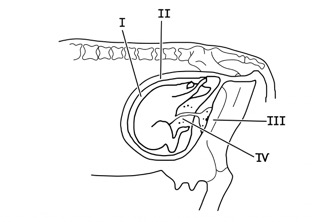
- A.gestation
- B.heat
- C.ovulation
- D.lactation
Show answer
Answer: B. heat
Get a step-by-step AI explanation in the appGet a step-by-step AI explanation in the app
- 49.
The foot and mouth disease of cattle is caused by a
- A.virus
- B.fungus
- C.nematode
- D.bacterium
Show answer
Answer: A. virus
Get a step-by-step AI explanation in the appGet a step-by-step AI explanation in the app
- 50.
When a piece of land is leased to a farmer, the land is said to be
- A.Purchase on loan
- B.given to him as subsidy
- C.given as a gift
- D.allocated on a rental basis
Show answer
Answer: D. allocated on a rental basis
Get a step-by-step AI explanation in the appGet a step-by-step AI explanation in the app
- 51.
A major symptom of onion/twister is
- A.motting of leaves
- B.appearance of dark brown spots on leaves
- C.rottening of buds
- D.rottening of roots
Show answer
Answer: A. motting of leaves
Get a step-by-step AI explanation in the appGet a step-by-step AI explanation in the app
- 52.
Which of the following feedstuff does not contain phosphorus?
- A.limestone
- B.fish meal
- C.blood meal
- D.oyster shell
Show answer
Answer: C. blood meal
Get a step-by-step AI explanation in the appGet a step-by-step AI explanation in the app
- 53.
Which of the following is not a characteristic of a good pasture?
- A.provision of balance nutrients
- B.high stem to leaf ratio
- C.high quality of grass
- D.ability to withstand trampling
Show answer
Answer: B. high stem to leaf ratio
Get a step-by-step AI explanation in the appGet a step-by-step AI explanation in the app
- 54.
Which of the following processes does not lead to the physical disintegration of rock?
- A.expansion and contraction of rock minerals
- B.formation of cracks and cervices in the rocks
- C.heating and cooling of rock surface
- D.rapid cooling and solidification of rocks
Show answer
Answer: D. rapid cooling and solidification of rocks
Get a step-by-step AI explanation in the appGet a step-by-step AI explanation in the app